
WIMBIZ is a non-profit organization that seeks to empower Women in Management, Business and Public Service. Earlier this year, they ran a Women on Boards mentoring program. I was one of over 150 mentees who, for 3 months, got to hone our governance and fiduciary skills while learning from accomplished board member mentors. We participated in simulations and in live sessions on topics ranging from Understanding Boardroom Dynamics to Corporate Governance and Board Leadership.

A key part of the program involved one-on-one mentoring and we had the opportunity to request who we’d like to mentor us. Mine, Bella Disu, was fantastic. I am so appreciative of her time, especially given that all mentors opt in and give of their insights pro bono. During our sessions, she recommended a book, How Boards Work by Dambisa Moyo.
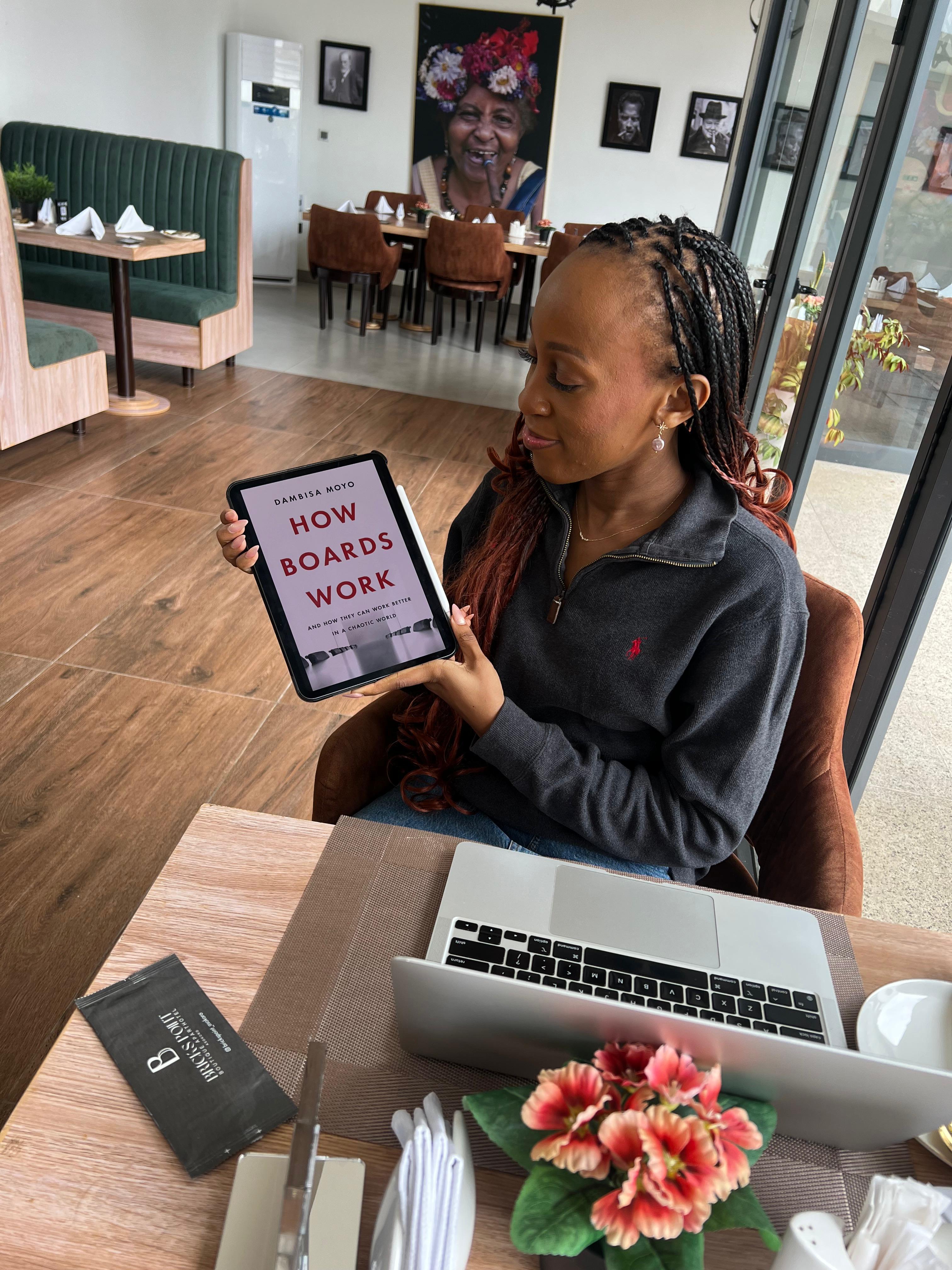
The book goes into helpful details on the purpose of a corporate board (its reason for being) and situates the board within the changing global landscape. I was particularly interested to read Baroness Moyo’s take on our increasingly siloed and protectionist world and its potential impact on boards and companies. Of note was her highlighting the fragmentation of the internet between the United States and China, and what that might imply for digital-native businesses.
“Today, the corporations that will truly differentiate themselves are those with boards and management teams that are focused on five factors: the risk of a more siloed and protectionist world, massive changes in the investment landscape, new technological developments, the global war for talent, and, ultimately, short-termism itself.”
A new concept I learnt from the book: Carry Trade. A “carry trade” is a strategy of borrowing at low interest rates in developed countries and investing in higher-yielding emerging markets. It essentially is a strategy global conglomerates employ, leveraging their presence in different markets to give themselves an even greater competitive advantage.
Baroness Moyo also discusses the new trends that meaningfully influence how companies approach staffing their boards. These are the needs for: geopolitical expertise, technology skills and diversity of race, gender and experience. As someone who embodies the archetype for all three of these, I look forward to contributing meaningfully to more boards over the course of my career.
If you’re a prospective or sitting board member, I recommend this read. It was a quick but engaging take on the evolving role of corporate boards, including stories from Dambisa Moyo’s direct involvement on several boards, like SABMiller, Barclays and Barrick Gold, to name a few.
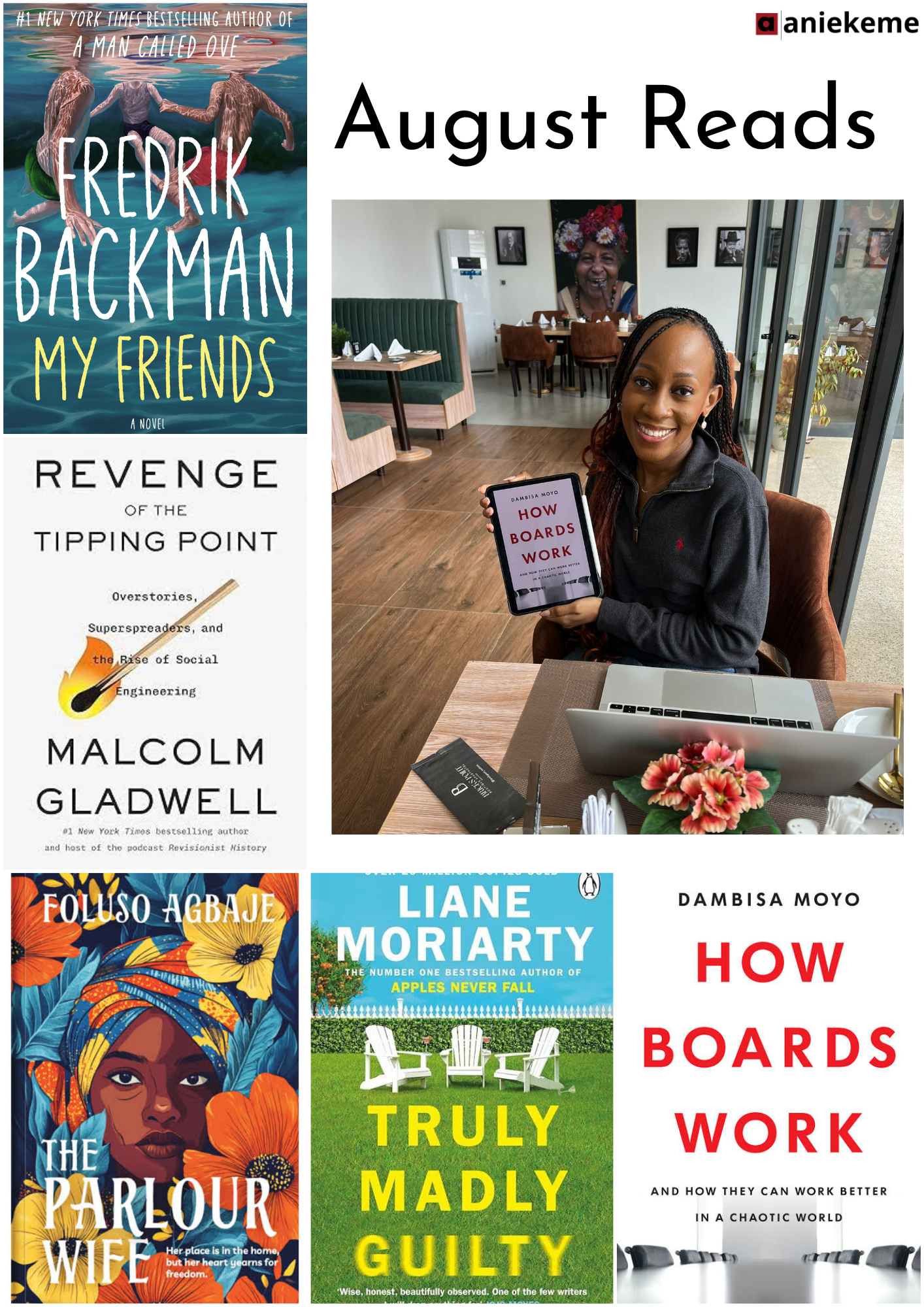
I don’t need to say how important reading is. We all know this. This year, I made it a point to track what I read each month. And now I’ve decided I’ll start sharing my reading lists for whoever is interested. So here’s August’s:
1. My Friends – Fredrik Backman
2. Truly, Madly, Guilty – Liane Moriarty
3. The Parlour Wife – Foluso Agbaje
4. Revenge of the Tipping Point – Malcolm Gladwell
5. How Boards Work – Dambisa Moyo
Warmly,
Aniekeme