
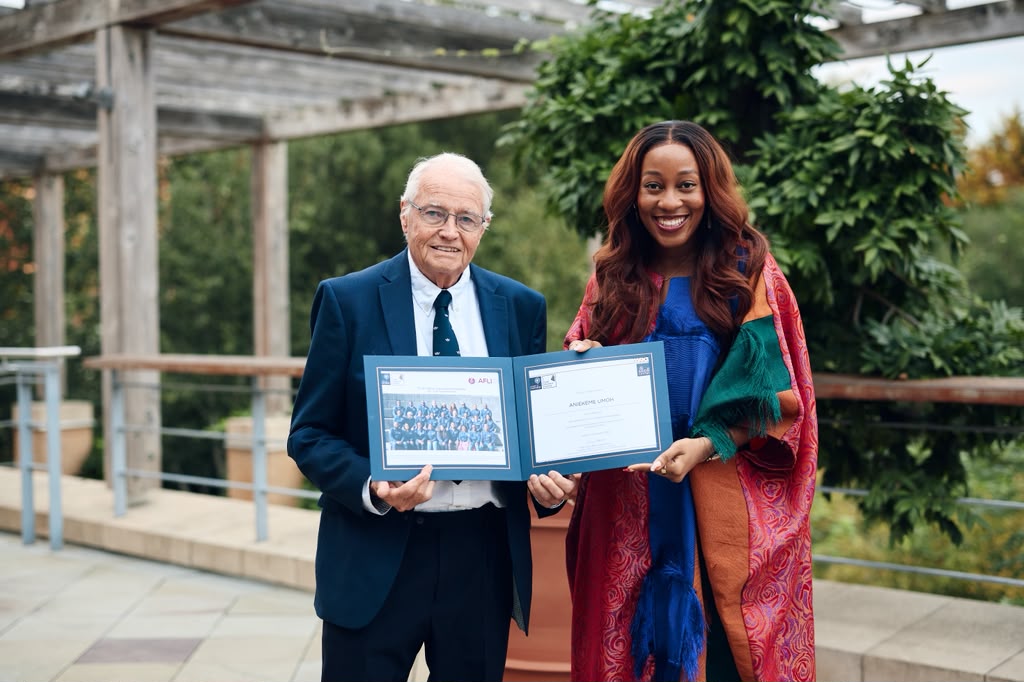
Aniekeme Umoh Officially Inducted Into The 2026 Archbishop Desmond Tutu Fellowship
Education access advocate and social impact leader, Aniekeme Umoh, was selected as one of the emerging African leaders for the 2026 cohort of the prestigious Archbishop Desmond Tutu Fellowship and has officially been inducted as a fellow.
Her selection followed a highly competitive nomination and selection process involving hundreds of nominations from across the continent, bringing together leaders committed to ethical leadership, governance, innovation, and transformational impact across Africa.
Aniekeme currently serves as the Chief Operating Officer of the uLesson Group and Miva Open University, where she plays a key role in advancing access to quality education and driving operational excellence across education and technology platforms shaping the future of learning in Africa. She is also the Co-Founder of UAIER, a platform committed to expanding opportunities and advancing conversations around education, innovation, and leadership.
Her induction reflects a strong track record of leadership, a deep commitment to expanding access to education, and meaningful contributions to youth development, innovation, and social impact initiatives within Nigeria and beyond.
Operating at the intersection of education, leadership, innovation, and social impact, Aniekeme has consistently championed initiatives focused on empowering young people, expanding educational opportunities, and driving sustainable community transformation. Through her work across education leadership, institutional growth, and advocacy, she continues to contribute to conversations and initiatives shaping the future of African leadership and opportunity.
As part of the 2026 Fellowship Programme, she participated in the first phase of the programme in Cape Town, South Africa, in April 2026. The programme brought together fellows for immersive learning, dialogue, and leadership development, with a focus on ethical leadership, governance, systems thinking, and societal transformation.
In September 2026, the fellowship continued at Saïd Business School, University of Oxford, where she participated in the induction programme and was formally inducted as a fellow. The Oxford programme brought together fellows and leaders from diverse backgrounds for a series of sessions centred on leadership, governance in Africa, citizen participation, artificial intelligence, innovation, and the role of leadership in shaping society.
About the Archbishop Desmond Tutu Fellowship
The Archbishop Desmond Tutu Fellowship is a leadership development programme inspired by the legacy and values of Archbishop Desmond Tutu. The fellowship brings together emerging African leaders across sectors to strengthen ethical leadership, foster collaboration, and equip leaders committed to driving positive transformation across the continent.
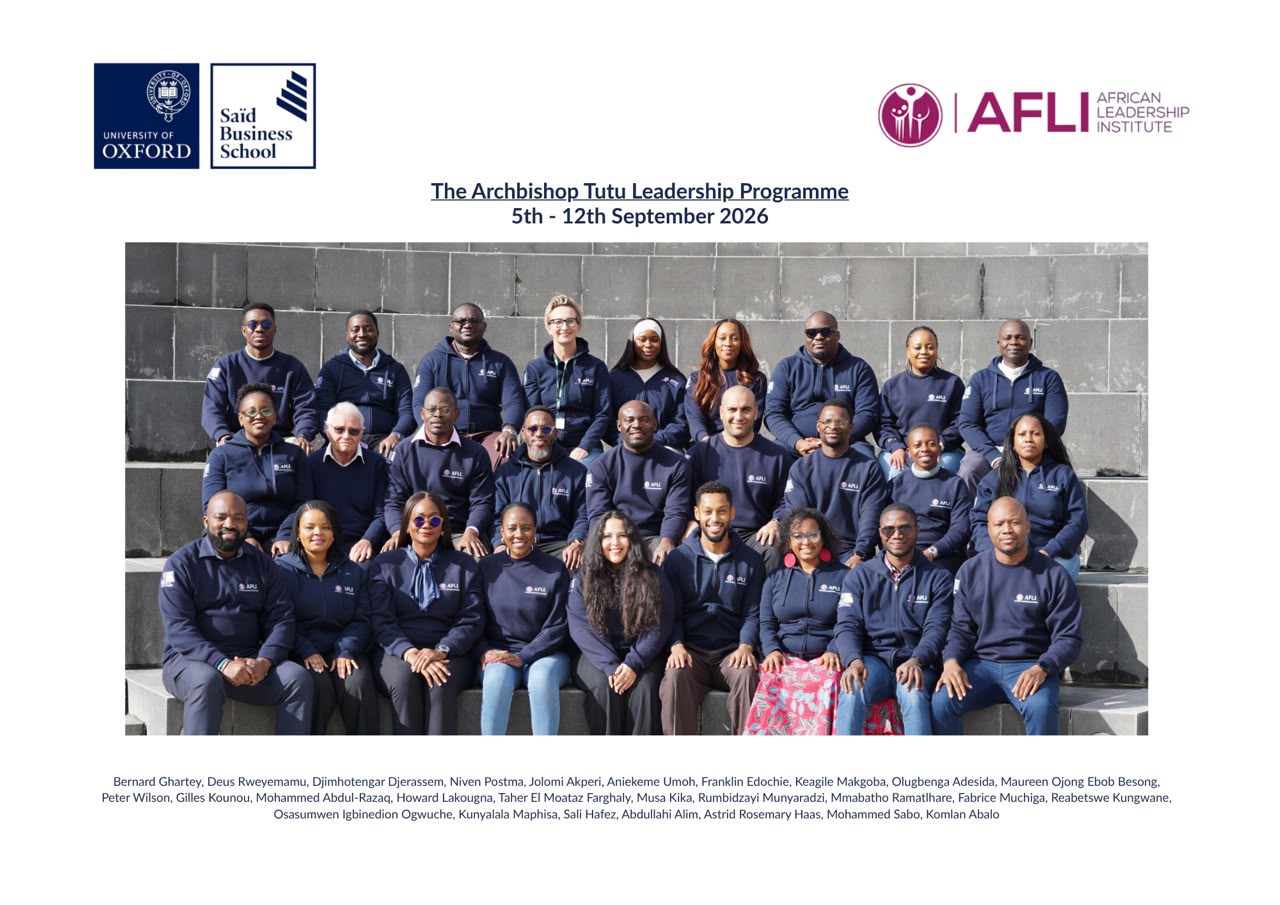
Cape Town and Oxford: The Fellowship Experience
Cape Town, South Africa, provided a powerful setting for the first phase of the fellowship, bringing together African leaders for conversations on the nature and responsibility of leadership at a critical time for the continent. Inspired by Archbishop Desmond Tutu's legacy, the programme explored themes of transformational leadership, public service, truth, moral courage, collaboration, personal leadership, and strategic change. Through dialogue, reflection, experiential learning, and engagement with the works of Desmond Tutu, fellows were invited to consider not only the kind of leaders they aspire to be, but also the contribution they can make to shaping Africa’s future.
Oxford, United Kingdom, provided a different but complementary setting for the fellowship’s September programme and induction. Hosted largely at Saïd Business School, University of Oxford, the programme created space for fellows to deepen their leadership journey through reflection, dialogue, and engagement with contemporary questions facing Africa and the wider world. Sessions explored citizen participation and everyday democracy, leadership and identity, African governance, the political economy of artificial intelligence, innovation, and the influence of narratives and historical perspectives on society. The programme also created opportunities for fellows to connect their individual leadership journeys with broader questions of governance, society, and collective responsibility, culminating in their formal induction into the fellowship community.
We celebrate this milestone and look forward to the continued impact of Aniekeme’s leadership journey as part of this transformative fellowship experience